Archives
- 2026-06
- 2026-05
- 2026-04
- 2026-03
- 2026-02
- 2026-01
- 2025-12
- 2025-11
- 2025-10
- 2025-09
- 2025-03
- 2025-02
- 2025-01
- 2024-12
- 2024-11
- 2024-10
- 2024-09
- 2024-08
- 2024-07
- 2024-06
- 2024-05
- 2024-04
- 2024-03
- 2024-02
- 2024-01
- 2023-12
- 2023-11
- 2023-10
- 2023-09
- 2023-08
- 2023-07
- 2023-06
- 2023-05
- 2023-04
- 2023-03
- 2023-02
- 2023-01
- 2022-12
- 2022-11
- 2022-10
- 2022-09
- 2022-08
- 2022-07
- 2022-06
- 2022-05
- 2022-04
- 2022-03
- 2022-02
- 2022-01
- 2021-12
- 2021-11
- 2021-10
- 2021-09
- 2021-08
- 2021-07
- 2021-06
- 2021-05
- 2021-04
- 2021-03
- 2021-02
- 2021-01
- 2020-12
- 2020-11
- 2020-10
- 2020-09
- 2020-08
- 2020-07
- 2020-06
- 2020-05
- 2020-04
- 2020-03
- 2020-02
- 2020-01
- 2019-12
- 2019-11
- 2019-10
- 2019-09
- 2019-08
- 2019-07
- 2019-06
- 2019-05
- 2019-04
- 2018-11
- 2018-10
- 2018-07
-
Because of the lack of sequence current
2020-07-01
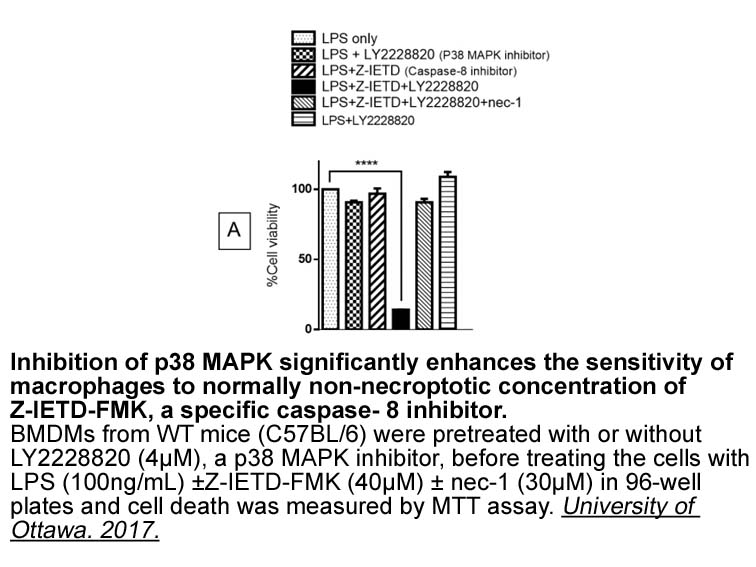
Because of the lack of sequence, current knowledge on the cellular regulation of CoA-IT is scarce. However, recent work has suggested an interesting new role for CoA-IT in regulating the extent of the AA mobilization response in primed macrophages. Bacterial lipopolysaccharide (LPS) is a poor trigge
-
br Materials and methods br Results Overexpression of KLF
2020-07-01
Materials and methods Results Overexpression of KLF2 increased the cell viability and reduced the LDH leakage rate and O2•− and ONOO− generation in H/R HUVEC model. To evaluate the effect of KLF2 on H/R HUVEC injury, KLF2 was overexpressed in HUVECs. Cell viability and extracellular LDH level
-
br Material and methods br Results
2020-07-01
Material and methods Results Discussion The results show for the first time that DDRs may be involved in the pathogenic mechanisms of neurodegenerative diseases. We found that DDR1 and DDR2 levels are up-regulated in post-mortem AD and PD brains, suggesting that these receptors play a role
-
To elucidate whether the impact of hypoxia on
2020-07-01
To elucidate whether the impact of hypoxia on EGFR expression is cell context specific or culturing density dependent, we chose the following cancer 17-aag driven by EGFR and evaluated the EGFR expression after hypoxia treatment at different culturing density: a highly aggressive and poorly differe
-
All components of the UPP
2020-07-01
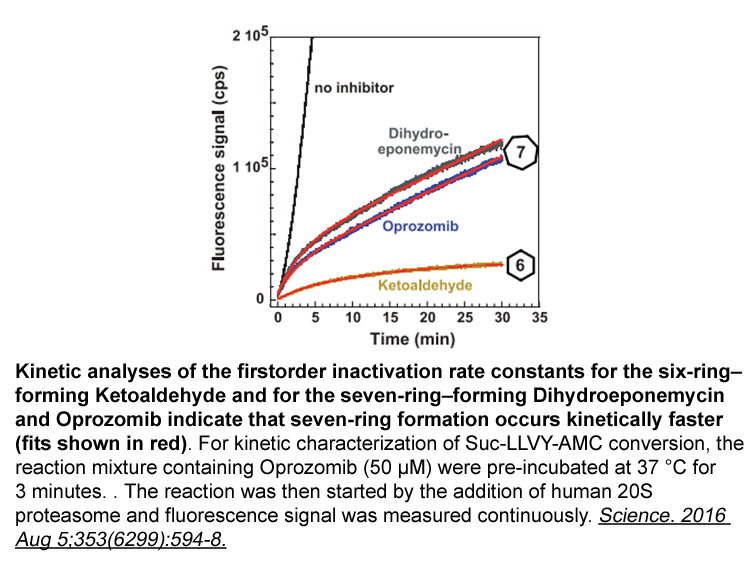
All components of the UPP were predicted to be susceptible to oxidative stress due to the cysteine residues in their active sites [36]. Curcusone D inhibits DUBs but has no significant effect on the action of E1, E2s, E3s, or the proteasome, which indicates that the targets of the ROS induced by cur
-
However a two receptor model presents a mystery of
2020-07-01
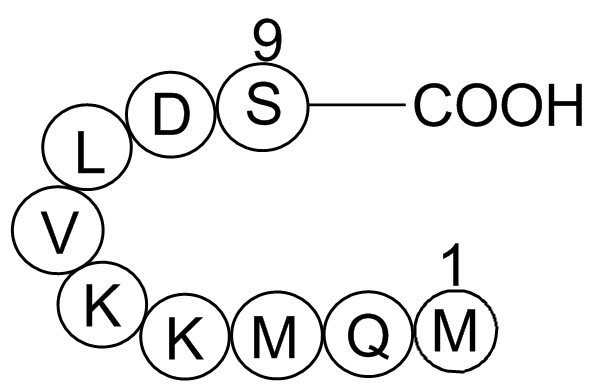
However, a two-receptor model presents a mystery of how MBns know whether they are receiving an acquisition or forgetting signal from the PPL1 DAns. The most attractive explanation for this is that the two receptors might have different signaling properties and mobilize distinct signaling cascades.
-
It has been reported that vernolic acid
2020-07-01
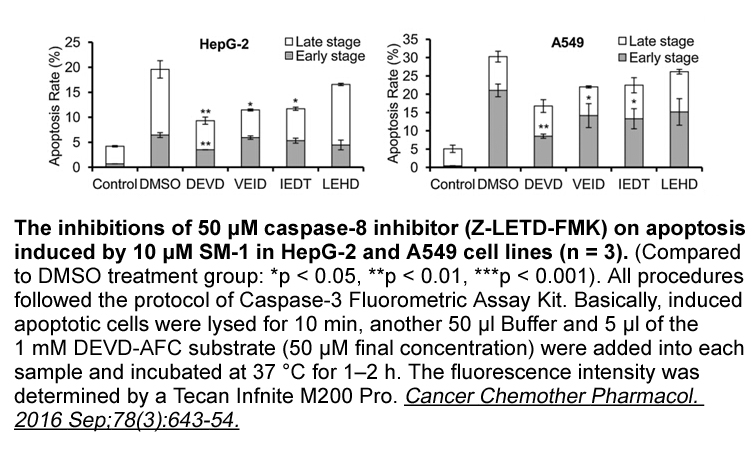
It has been reported that vernolic THZ531 accumulation in transgenic Arabidopsis seeds expressing a Δ12-epoxygenase often resulted in failure of germination and impaired growth and development (Singh et al., 2001). Similar phenomena were also reported for transgenic Arabidopsis seeds with accumulat
-
To further determine the cell death the cells
2020-07-01
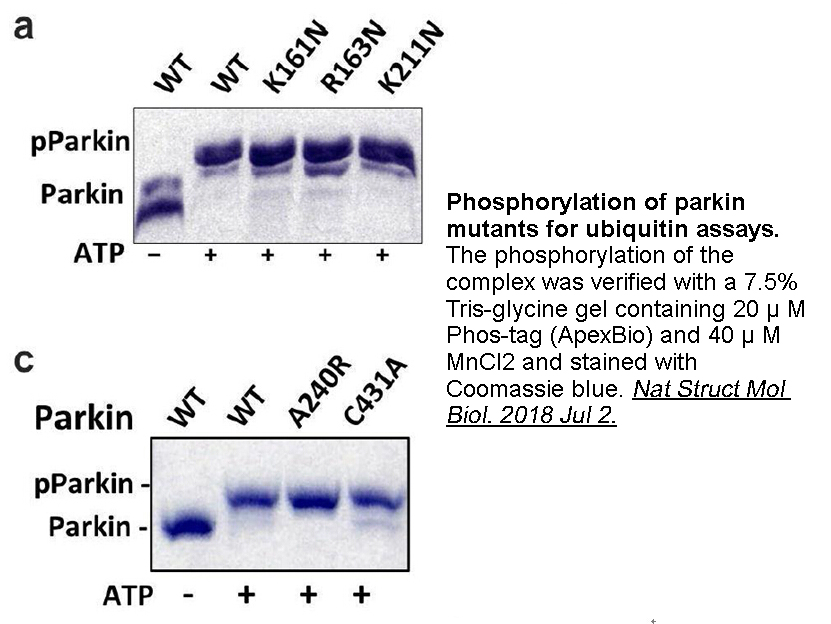
To further determine the cell death, the PF-00562271 in flasks were harvested after OGD or LTD4 treatment, washed twice with PBS, and evaluated with Annexin V (AV)-FITC apoptosis detection kit I (BD Biosciences Pharmingen, USA) on a flow cytometer (FACSCalibur, Becton–Dickinson, USA). Briefly, 106
-
The cpm corresponding to bound substrate in the
2020-06-30
The cpm corresponding to bound substrate in the sample well can be expressed as the difference between the total cpm in the sample well (3Hswtotal; 14Cswtotal) and the cpm for the unbound substrate in the sample well, as illustrated by Eq. (2): By combining Eqs. (1), (2), cpm for the bound substrat
-
br Acknowledgements We thank Joseph Granger
2020-06-30
Acknowledgements We thank Joseph Granger and Bryan Neumann for careful reading of this manuscript. This work is supported by NIH grants AG37609 and HL 60306 to TYC and CCYC. Introduction Eleven million tonnes of waste are produced yearly by the European pulp and paper industry (Monte et al.,
-
The hepatic constitutive levels of
2020-06-30

The hepatic constitutive levels of CYP1A2 were minimal and were below detectable limits in the kidney, indicating an organ-specific trend which has been reported by other groups (Hawke and Welch, 1985, Paolini et al., 1997, Parkinson, 1996, Villard et al., 1998). Retinol administration did not have
-
DSBs can be repaired by two major
2020-06-30

DSBs can be repaired by two major pathways: canonical non-homologous end-joining (c-NHEJ) and homologous recombination (HR) (Chapman et al., 2012). c-NHEJ comprises two sub-pathways, a resection-independent process and a resection-dependent process, and can rejoin break ends with little or no sequen
-
One of the most frequent gene
2020-06-30
One of the most frequent gene alterations in MM is methylation of the p15 and p16 genes in the 5′ upstream region. P15 and p16 proteins are Rose Bengal sale regulators involved in the inhibition of transition from G1 to S phase. Frequencies of p15 or p16 gene methylation up to 32% and 53%, respect
-
The absorption rate of polyphenols into the body is usually
2020-06-30
The AZD8055 receptor rate of polyphenols into the body is usually low. For example, the absorption rate of epigallocatechin gallate (EGCG), an active component in GP, is approximately 1% (Chen et al., 1997). To increase absorption of GP in the body, people have been increasing their intake of funct
-
In this review we first introduce the in
2020-06-30

In this review, we first introduce the in vivo metabolism profile of VD3, and the mediation of Cyp3a gene transcription by PXR and CAR in humans, mice and rats. We then focus on the species-specific VDR-dependent regulation of human (CYP3A4, CYP3A5 and CYP3A7), mouse (mainly CYP3A11 and CYP3A13), an
16864 records 874/1125 page Previous Next First page 上5页 871872873874875 下5页 Last page