Archives
- 2026-06
- 2026-05
- 2026-04
- 2026-03
- 2026-02
- 2026-01
- 2025-12
- 2025-11
- 2025-10
- 2025-09
- 2025-03
- 2025-02
- 2025-01
- 2024-12
- 2024-11
- 2024-10
- 2024-09
- 2024-08
- 2024-07
- 2024-06
- 2024-05
- 2024-04
- 2024-03
- 2024-02
- 2024-01
- 2023-12
- 2023-11
- 2023-10
- 2023-09
- 2023-08
- 2023-07
- 2023-06
- 2023-05
- 2023-04
- 2023-03
- 2023-02
- 2023-01
- 2022-12
- 2022-11
- 2022-10
- 2022-09
- 2022-08
- 2022-07
- 2022-06
- 2022-05
- 2022-04
- 2022-03
- 2022-02
- 2022-01
- 2021-12
- 2021-11
- 2021-10
- 2021-09
- 2021-08
- 2021-07
- 2021-06
- 2021-05
- 2021-04
- 2021-03
- 2021-02
- 2021-01
- 2020-12
- 2020-11
- 2020-10
- 2020-09
- 2020-08
- 2020-07
- 2020-06
- 2020-05
- 2020-04
- 2020-03
- 2020-02
- 2020-01
- 2019-12
- 2019-11
- 2019-10
- 2019-09
- 2019-08
- 2019-07
- 2019-06
- 2019-05
- 2019-04
- 2018-11
- 2018-10
- 2018-07
-
Recently a method for in vivo photoactivation of
2019-10-30
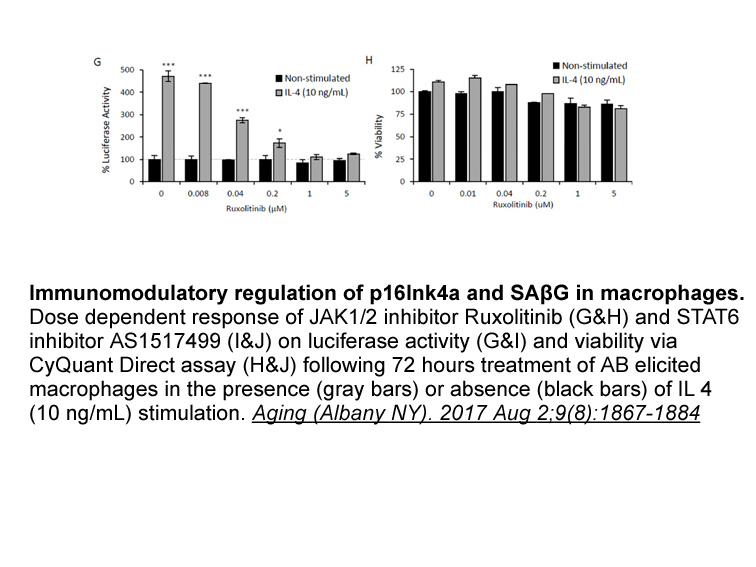
Recently, a method for in vivo photoactivation of AM095 synthesis expressing PA-GFP in precise microanatomical compartments was described (Victora et al., 2010), which makes it possible to optically mark Tfh cells and track them 20 hr later (Shulman et al., 2013). Unexpectedly, it was reported that
-
br Experimental Procedure br Acknowledgment This work was su
2019-10-30
Experimental Procedure Acknowledgment This work was supported by Ministry of Education, Singapore (MoE Tier-2) grant (R-154-000-625-112) and R154-000-A72-114 (AcRF Tier 1 grant) respectively. We acknowledge the Advanced Photon Source Beamline 24-ID-C, Argonne National Laboratory, USA. D.N. is
-
External factors such as protein partners can also activate
2019-10-30
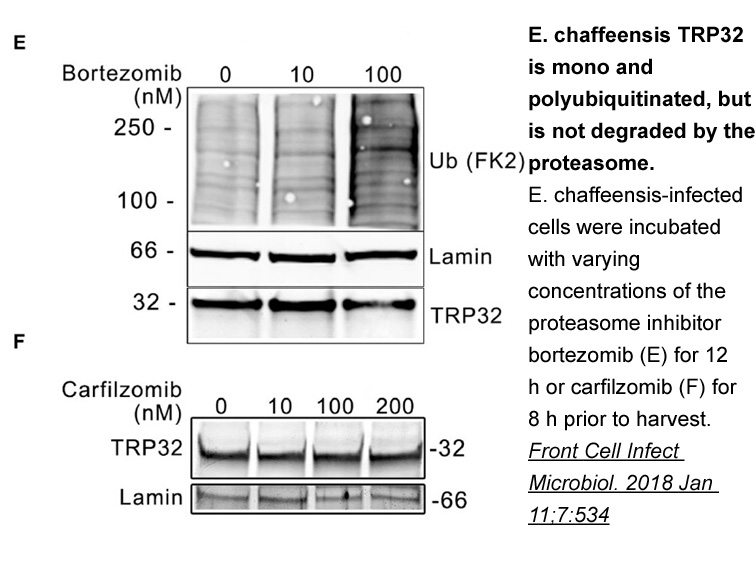
External factors, such as protein partners, can also activate DUBs by either reinforcing the stimulatory effects of intramolecular factors or by other means. The intramolecular activation of the USP7 CD by its HUBL domain is allosterically potentiated by external factor GMP synthase (GMPS), which co
-
AZD0156 br In half a century
2019-10-30
In 2015–2016, half a century after its first biochemical characterization as a template-independent polymerase, it was shown that TdT can, firstly, assemble a DNA synapsis by itself, optimally with one micro-homology base-pair between strands [] and secondly, perform a template-dependent nucleotid
-
Aldehyde dehydrogenase has been characterized as a cancer
2019-10-30
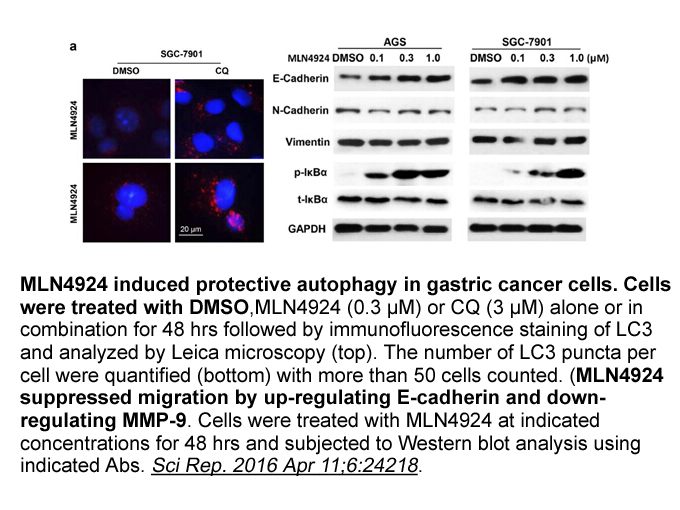
Aldehyde dehydrogenase has been characterized as a cancer stem cell marker, which plays a key role in various biological processes in tumor, including cell proliferation, invasiveness and chemoresistance. Recent data of Abourbih et al reported that ALDH1 expression did not correlate with primary tum
-
br Conclusions Overexpression of DDR might contribute to
2019-10-30
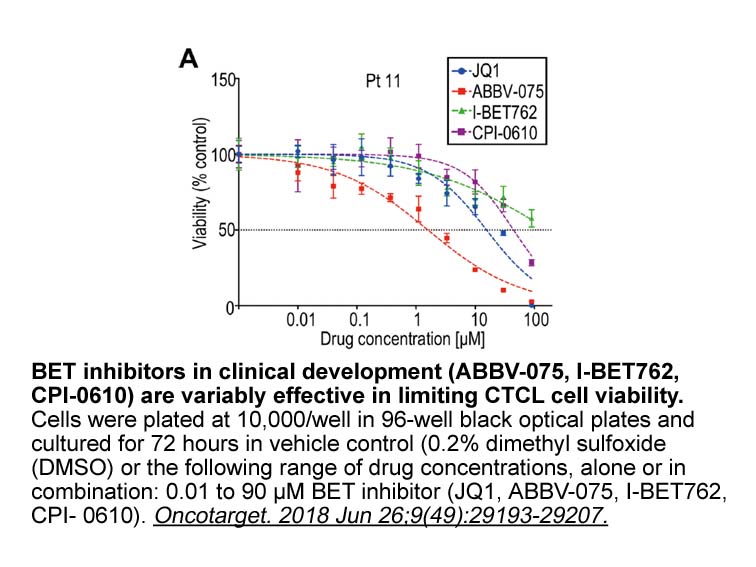
Conclusions Overexpression of DDR2 might contribute to tumor progression in lung SQCC, and the T681I mutation we found in this work is an inactivating mutation. There is a possibility that not only activating mutation but also overexpression of DDR2 might be a molecular target for treatment of lu
-
br Results br Discussion PKR
2019-10-29
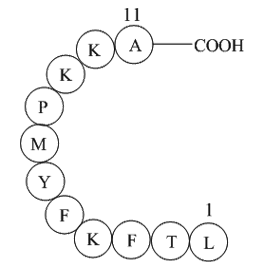
Results Discussion PKR is activated by viral dsRNA and exerts its antiviral effect through phosphorylation of eIF2a. Because eIF2a phosphorylation leads to attenuation of protein synthesis, many viruses have evolved mechanisms to block or suppress PKR activation. Some viruses use alternative t
-
To further explore whether it
2019-10-29
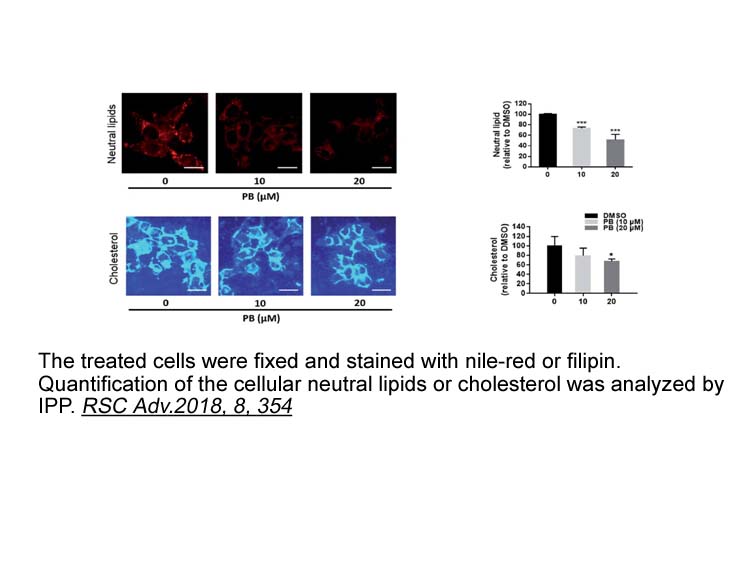
To further explore whether it Bacitracin is the bisulfite conversion or the HRM amplification that limited the efficiency of amplification of DNA of DNA levels below 1 ng, we performed serial dilutions of bisulfite-modified samples prepared with 1 ng of input genomic DNA. Four different quantities
-
Direct coupling between DNA methyltransferase enzymes and po
2019-10-29
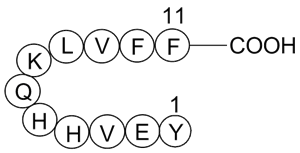
Direct coupling between DNA methyltransferase enzymes and posttranslational modifications on histone proteins has been observed in mammals. For example, DNMT3A recognizes unmodified H3 through an ATRX-DNMT3-DNMT3L (ADD) domain, and its activity is inhibited by methylation of H3 at K4 (Li et al., 201
-
br Introduction br Sphingolipid metabolism Sphingolipids
2019-10-29
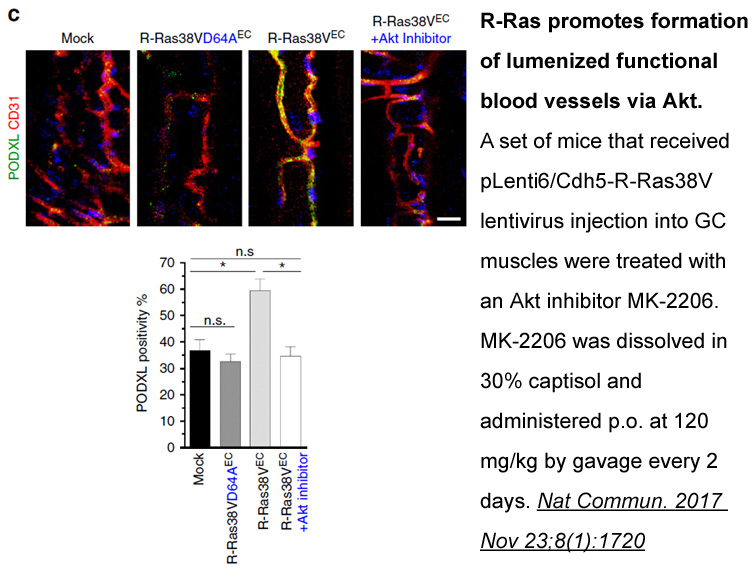
Introduction Sphingolipid metabolism Sphingolipids, are fundamental constituents of all eukaryotic membranes and their metabolism is carried out by a broad array of anabolic and nitric oxide synthase inhibitors with ceramide as their hub (for a review, (Hannun and Obeid, 2018)). Ceramide can
-
br Signaling of DDR receptor and its regulation
2019-10-29
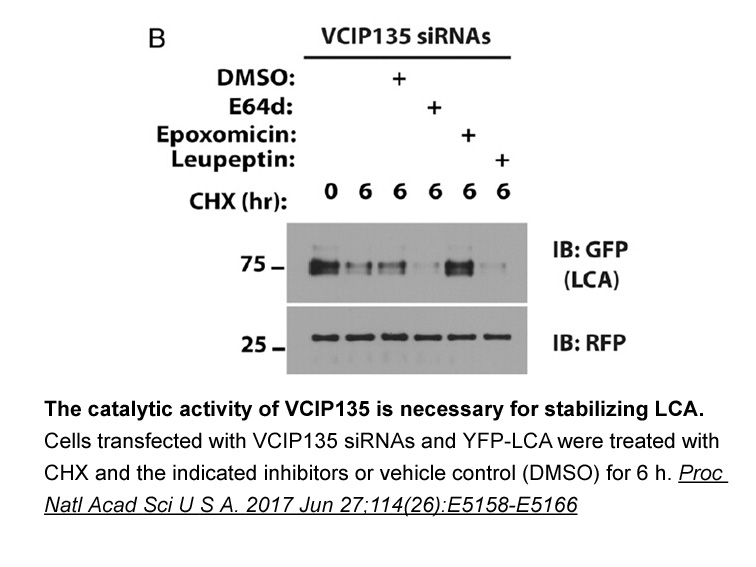
Signaling of DDR2 receptor and its regulation Being the tyrosine kinase receptor, downstream signaling of DDR2 receptor is initiated by phosphorylation of cytoplasmic tyrosine residue upon ligand binding (Type II collagen) but the authentic facts or detail information of tyrosine phosphorylation
-
The aim of this study was
2019-10-29
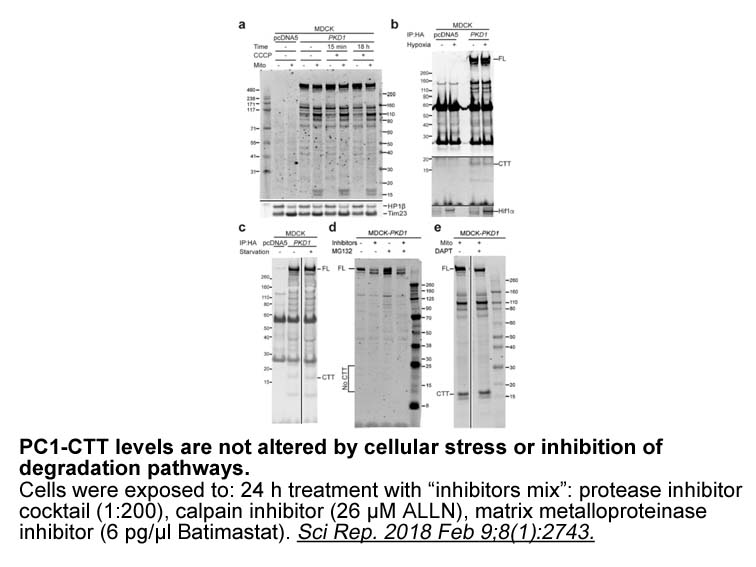
The aim of this study was to evaluate the role of aberrant methylation of promoter regions of tumor suppressor genes in the clonal evolution from MGUS to MM. Thus, we analyzed in MGUS, SMM, and symptomatic MM patients, the methylation status of 4 genes—p15, p16, p53, and DAPK—whose promoter hypermet
-
Defensins are one major class of antimicrobial cationic pept
2019-10-29
Defensins are one major class of antimicrobial, cationic peptides that are released from tnf alpha inhibitor and imbedded in the mucus layer on mucosal surfaces [45]. They can be categorized into two major families; α- and β-defensins. In humans there are two α-defensin members, defensin 5 (HD5) an
-
Furthermore our sample preparation uses a simple isolation p
2019-10-29
Furthermore, our sample preparation uses a simple isolation procedure. Numerous CYP450 phenotyping methods employed extensive extraction procedures for sample preparation such as dual liquid extraction or solid phase extraction which are costly and time consuming [10], [17], [18], [19], [20], [23],
-
Introduction Numerous professional governmental and media so
2019-10-29
Introduction Numerous professional, governmental, and media sources report a strong demand for and even a scarcity of new entrants to the fields of professional accounting and auditing. Furthermore, reports emphasize expectations of continuing high demand in the future (AICPA, 2015, Manpower Group,
16861 records 999/1125 page Previous Next First page 上5页 9969979989991000 下5页 Last page